Project
BEHAVIORAL SYSTEMS & SPATIAL RESEARCH
Client
UNIBAIL RODAMCO WESTFIELD
Category
[Featured]
Year
2014 - 2016
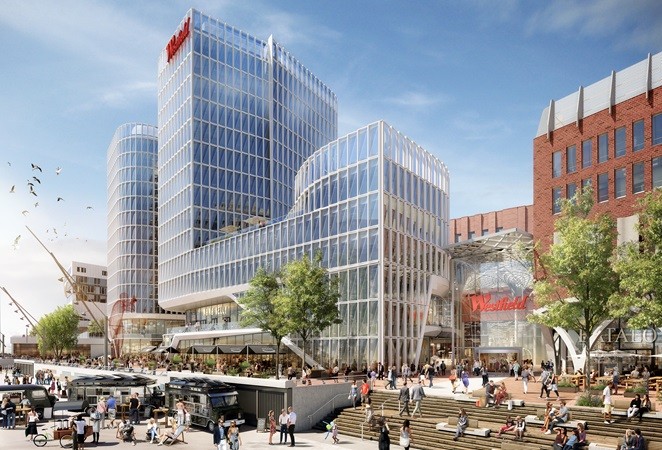
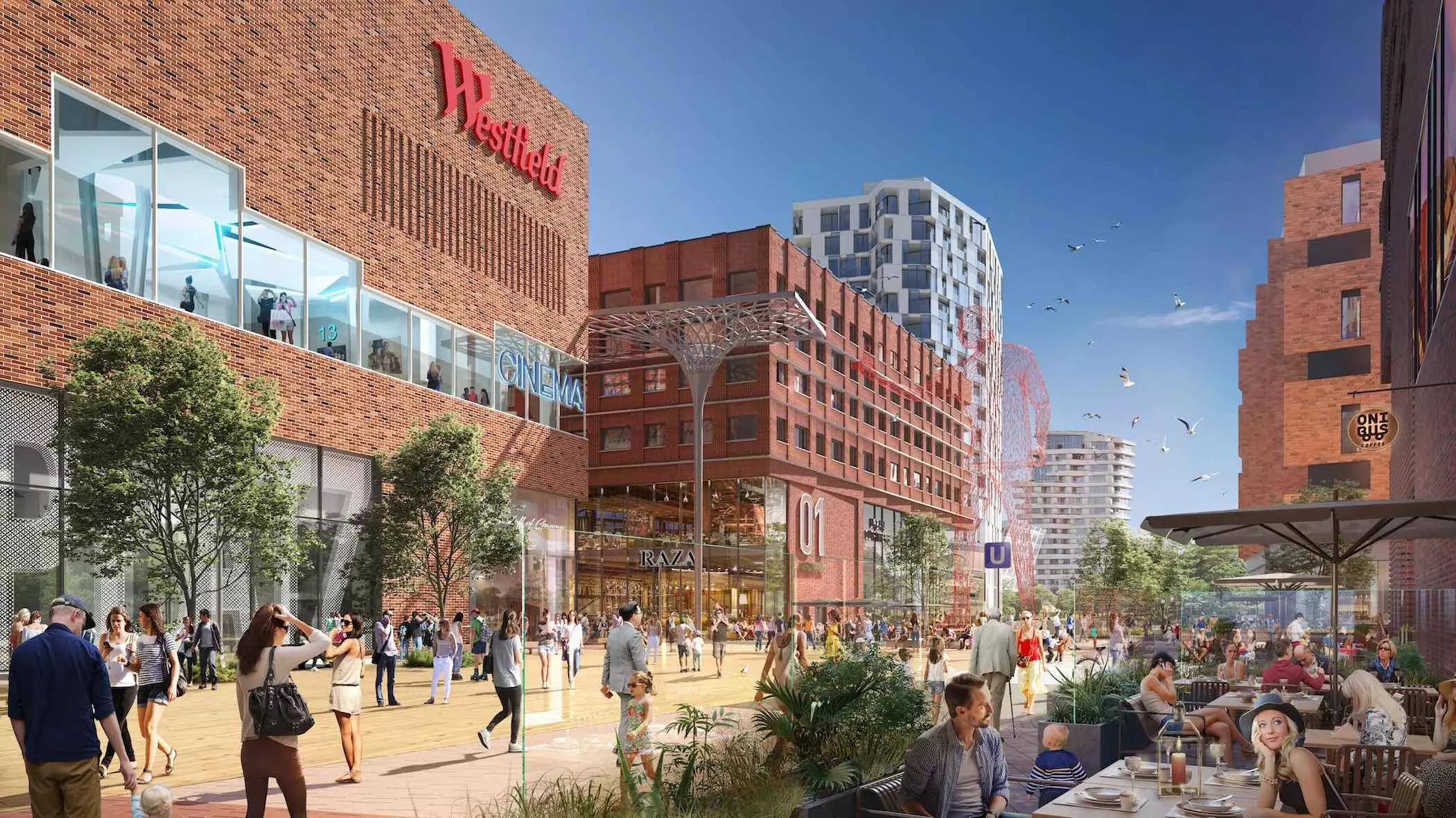
UNIBAIL-RODAMCO-WESTFIELD (MFI DEVELOPMENT GMBH) PROJECT: Spatial Systems ORGANISATION: Unibail-Rodamco-Westfield (mfi Development GmbH) CATEGORY: Behavioral Research | [Foundation] [Human] | Changed how design teams review spatial decisions YEAR: 2014 – 2016 Behavioral Systems Research in Retail Environments Why Me Shopping centers are designed by architects and engineers. They optimize for circulation, sightlines, lease value, and fire codes. What they don't see is behavior—because nothing in their training teaches them to watch people the way a nurse watches patients. I came to this work from a different place. Before design school, I worked ICU shifts, reading the nonverbal signals of people who couldn't speak for themselves. I learned to see what environments do to bodies: where stress accumulates, where people hesitate, where the room fails them before anyone says a word. When I later studied industrial design under Marc Hassenzahl at Folkwang, I learned to frame these observations as interaction problems—not aesthetic ones. So when I walked through a shopping center, I didn't see what the architects saw. I saw the seating areas that were always empty despite being "well-designed." I saw the junctions where people consistently turned the wrong way. I saw zones designed for lingering that people rushed through, and families clustering in unplanned corners because that's where the real pause points were. The gap wasn't in the design. The gap was in seeing. What I Saw The organization had data: footfall counts, dwell time averages, heat maps. What they didn't have was interpretation. Numbers told them where people went. They couldn't tell them why people avoided the places designed to attract them—or why crowds gathered in spaces that weren't designed for gathering at all. Across three centers—Überseequartier Hamburg, Palais Vest, Ruhrpark Bochum—I watched. Not from control rooms, but from the floor. I tracked the difference between intended paths and desire lines. I noted where parents lost sight of children, where couples separated to browse, where elderly visitors gave up and sat on planters because the benches were in the wrong place. What emerged wasn't a list of problems. It was a pattern: design decisions were being made for an imaginary customer who moved logically, read signage, and followed architectural cues. The real customer was distractible, tired, socially negotiating with companions, and making decisions based on signals the designers never considered. What I Made Visible The value wasn't in the observations themselves. It was in making them shareable. I translated what I saw into frameworks that design teams could use: behavioral maps that showed where assumptions broke down, storytelling structures that gave each center a logic rooted in how people actually moved, and guidelines that connected spatial decisions to observed behavior rather than inherited convention. These weren't presentations that got filed. They entered the working language of the teams. Design reviews started asking different questions—not "does this look right?" but "what will people actually do here?" What Changed Decision-makers gained something they'd never had: evidence of how their assumptions failed, in terms they could act on. Spatial interventions followed. Seating moved. Wayfinding shifted. Service placements were reconsidered. Visitor engagement increased significantly, commercial performance improved measurably—but the real shift was in the conversation. Design stopped being about what architects preferred and started being about what behavior revealed. Three years after I left, the principles were still operational. Not because I was there to enforce them, but because they'd become how the teams saw.
UNIBAIL-RODAMCO-WESTFIELD (MFI DEVELOPMENT GMBH) PROJECT: Spatial Systems ORGANISATION: Unibail-Rodamco-Westfield (mfi Development GmbH) CATEGORY: Behavioral Research | [Foundation] [Human] | Changed how design teams review spatial decisions YEAR: 2014 – 2016 REAL SPACES. REAL SCALE. AND THE GAP NOBODY WAS MEASURING. mfi Development GmbH — later Unibail-Rodamco-Westfield. Interior design department. Student employee. Two years of designing at a scale most designers never touch. THE WORK Design concepts with storytelling for entire shopping centers. Custom furniture, spatial buildouts, retail facade proposals, furnishing plans. Hand sketches through to 3D models and final presentations. Coordinating across architects, internal teams, and external service providers. Projects: Palais Vest, Ruhrpark Bochum, early development of Überseequartier Hamburg. Real spaces. Millions of people walking through what I helped design. WHAT I COULDN'T UNSEE Architects optimize for circulation, sightlines, lease value. They design for a customer who follows spatial cues. Six years in healthcare taught me to read environments through bodies, not blueprints. And the bodies told a different story. Seating areas empty despite being well-placed. Junctions where people consistently went the wrong way. Food floors where traffic had nothing to do with layout logic. Families clustering in unplanned corners. I applied Hassenzahl's experience-first framework to what I was observing — behavioral maps and spatial guidelines connecting design decisions to actual behavior. They were never implemented. The process was not set up for that input from a student employee. But that practice — making the invisible visible — became central to everything I built at Grau. WHY IT MATTERS I learned to work at real scale. And I developed the instinct that became my core capability — seeing the gap between how organizations design experiences and how people actually experience them. The design work is documented. The observation is my interpretation. That distinction matters to me. But the instinct started here.
UNIBAIL-RODAMCO-WESTFIELD (MFI DEVELOPMENT GMBH) PROJECT: SPATIAL SYSTEMS ORGANISATION: UNIBAIL-RODAMCO-WESTFIELD (MFI DEVELOPMENT GMBH) CATEGORY: BEHAVIORAL RESEARCH | [FOUNDATION] [HUMAN] | YEAR: 2014 – 2016 REAL SPACES. REAL SCALE. mfi Development GmbH — later URW. Interior design department. Two years designing shopping centers most designers never get near. THE WORK Palais Vest. Ruhrpark Bochum. Überseequartier Hamburg. Concepts, custom furniture, facades, 3D models, presentations. Coordinating across architects and service providers. Millions of people walking through what I helped design. WHAT I COULDN'T UNSEE Architects design for logical customers. Healthcare taught me to read rooms through bodies. The bodies told a different story — empty seating areas, wrong-way junctions, families clustering where nobody planned for them. I made behavioral maps applying Hassenzahl's framework. Never implemented — a student employee's observation was not what the process was built for. But that practice became everything I later built at Grau. WHY IT MATTERS Where I first saw the gap between designed experiences and real behavior. The design is documented. The observation is my interpretation. The instinct started here.
Credits
Credits
IMAGES SOURCED FROM URW'S PUBLIC CLIENT COMMUNICATIONS, PRESS MATERIALS, AND INSTITUTIONAL PHOTOGRAPHY.ALL RIGHTS REMAIN WITH THEIR RESPECTIVE OWNERS.USED HERE FOR CONTEXTUAL AND ILLUSTRATIVE PURPOSES ONLY.